
Key Takeaways:
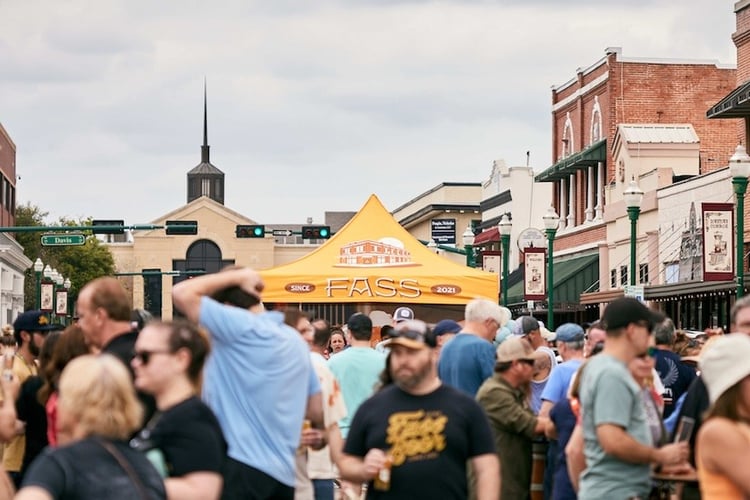
Undersized event activations risk creating a "bottleneck" where meaningful conversations are rushed or lost. Upgrading your footprint increases your engagement capacity.
While a larger tent size costs more upfront, it offers the lowest cost per square foot and can significantly lower your cost-per-conversation and cost-per-lead.
To get internal buy-in, stop talking about "buying a tent" and show leadership the math: for a marginal increase in investment, you are removing the physical barriers to sales and brand growth (see below).
You don’t have to overcommit. You can scale using modular growth (two 10’x10’s connected), phased upgrades (moving to a 10’x15’) or rentals of branded tents to test performance.
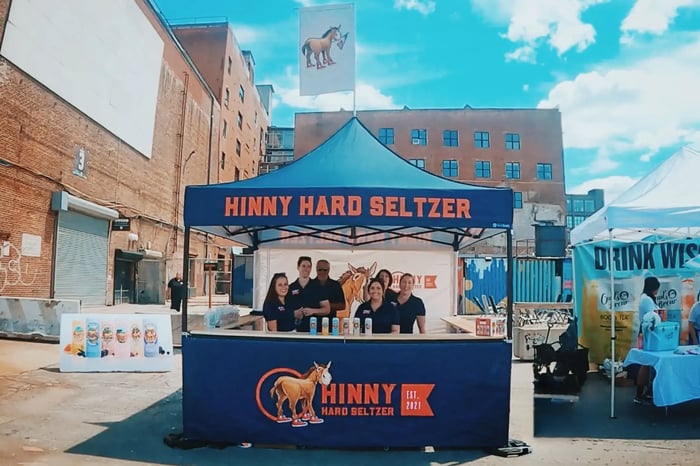
Most growing brands start with a 10’x10’ canopy tent. It’s practical. Portable. Budget-friendly. A smart way to enter the event space without overcommitting.
As your event program matures, however, and your discussions move from simply showing up with a branded tent to impacting key indicators of marketing and sales success, you'll likely start exploring the costs and value associated with larger tent sizes. That often means tying infrastructure investment to:
-
Generating qualified leads
-
Driving direct sales or fundraising revenue
-
Supporting sponsors and partners
-
Capturing content for social and digital campaigns
-
Creating a branded experience that reflects your growth and investment level
-
Justifying continued event investment internally
At that point, the real question isn’t, “Will a 10’x15’ or 10’x20’ cost more upfront?” It will. Instead, you’ll benefit from reframing event infrastructure purchases as investments to show where your current footprint is limiting performance.
To do this, you’ll start to think about engagement capacity, how many meaningful interactions your team can support per hour without sacrificing experience quality. And that is directly influenced by your activations footprint.
In this article, we’ll break down:
Comparison: The Real Cost Difference for 10’x10’ vs. 10’x15’ vs. 10’x20’ Tents
Let’s break down the size comparison conversation by deconstructing the various ways to evaluate what common sizes have to offer you and your event team.
As we all know, and as we mentioned above, larger tents require a larger upfront investment. That increase reflects structural scaling, expanded branding surface area, and greater operational capacity.
If we take TentCraft’s medium-duty mightyTent lineup across 3 sizes (see table below), we can start to understand how the shift in specs impacts operations relative to the increased investment.
|
Tent Size |
Square Footage |
Investment |
Increase from 10x10 |
Cost Per Sq Ft |
Operational Shift |
|
10’x10’ |
100 sq ft |
$2,000 |
— |
$20 |
Single engagement zone |
|
10’x15’ |
150 sq ft |
$3,000 |
+50% |
$20 |
Demo + conversation space |
|
10’x20’ |
200 sq ft |
$3,500 |
+75% |
$17.50 |
Multi-zone activation |
Obviously as size increases, so do aluminum framing requirements, canopy size and print area needs, structural reinforcement, etc.
From a pure specification and napkin math perspective, you can then look at the 10’x20’ pop-up tent and recognize that it delivers double the footprint of a 10’x10’ without doubling the cost. In fact, it provides the lowest cost per square foot.
And beyond material costs, you’re investing in infrastructure that will enable you to achieve marketing goals more easily.
For example, with a 100% increase in space you can now estimate having “x” more discussions or performing “y” more demos per hour than with the 10’x10.’ This will start to then allow you to determine how many more leads or how much more pipeline you can drive with a larger footprint.
The conversation shifts from:
“Why does it cost more?”
To:
“For $1,500 more, we double our engagement capacity.”
For teams focused on lead generation, fundraising, or product demos, that difference unlocks strategic growth and goes a long way toward making a strong internal case for a higher budget.
How Footprint Size Impacts Performance
As mentioned above, event success, in part, comes down to how many meaningful interactions you can handle per hour.
So let’s evaluate how size and engagement capacity directly impact one another.
A 10’x10’ tent footprint forces engagement to happen one to two conversations at a time. When traffic builds, everything compresses. Demos get abbreviated. Conversations lose depth. Prospects hesitate to step into a crowded space. Your team works harder, but output doesn’t increase proportionally. You hit a ceiling that isn’t about effort, it’s about square footage.
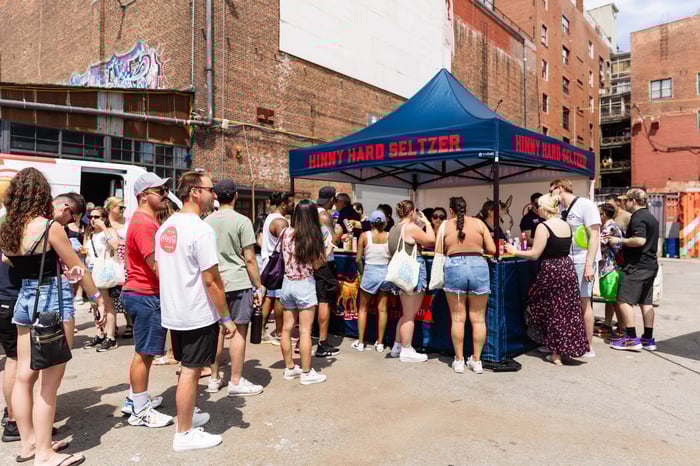
A larger footprint changes the math. With a 10’x15’ canopy tent, you create more breathing room. While still a relatively small footprint, you’ll notice that compared to your 10’x10’ experience, interactions start to feel intentional instead of reactive. Flow improves and lines caused by size-related bottlenecks are reduced. Attendees, prospects, and customers will enter more confidently. Your team is able to maintain quality even when volume increases.
Level up to a 10’x20’ footprint or larger and you’ll find that it doesn’t just add space, it can unlock new activation zones where engagement moves from sequential to parallel.
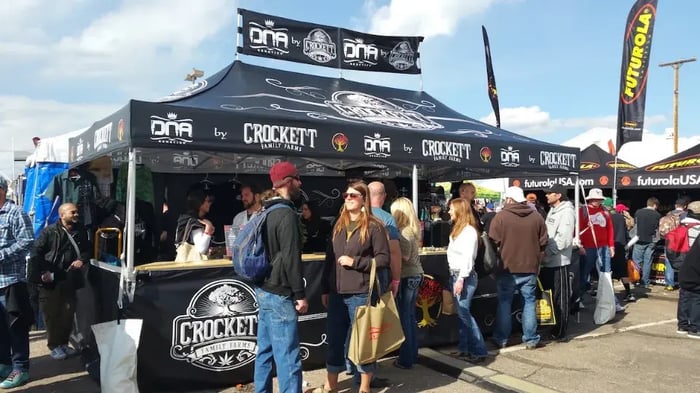
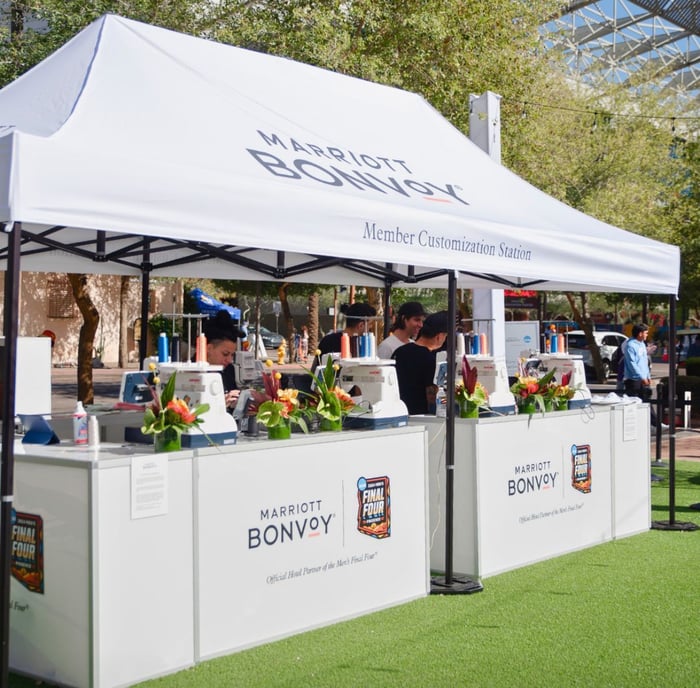
One team member runs a demo. Another hosts a sales conversation. Someone captures content. A sponsor gets appropriate printed wall and banner visibility. None of those activities compete for physical space. That’s when performance starts scaling without extending event hours or adding more staff.
You've made cross-functional activations more realistic. Sales gains a semi-private meeting area. Marketing gets a reliable content backdrop. Partnerships can activate sponsors professionally. Leadership can step into the space and host stakeholders without disrupting engagement flow.
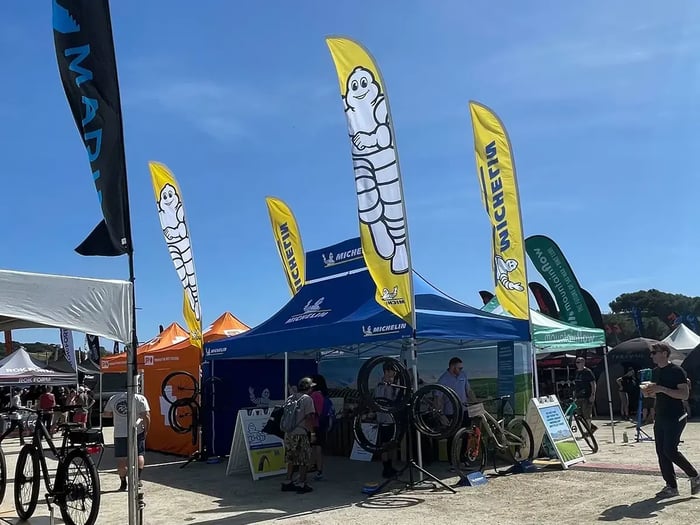
The structure stops being a marketing expense. It becomes shared revenue infrastructure. And when multiple departments benefit, the value, and often the budget, expands accordingly.
Recommended Reading for an in-depth exploration on sizes and their use cases: Which Size Custom Canopy Tent Do You Need? Sizing Guide (+Helpful Charts)
Calculating the ROI Difference Between Tent Sizes
In order to help make this clearer, let’s look at a 6-hour event window to compare the potential outcomes from two of the most popular tent sizes.
|
Metric |
10’x10’ |
10’x20’ |
|
Tent Investment |
$2,000 |
$3,500 |
|
Square Footage |
100 sq ft |
200 sq ft |
|
Conversations per Hour |
20 |
40 |
|
Total Conversations (6 hrs) |
120 |
240 |
|
Qualified Leads / Actions (10%) |
12 |
24 |
|
Cost Per Conversation |
~$16.67 |
~$14.58 |
By doubling the engagement capacity, the 10’x20’ tent lowers the cost per engagement.
As you can imagine, if you have a handle of your conversation to lead rate or conversation to customer rate, you pretty quickly have a clean way to understand where cost savings + added value + and bottom line growth are impacted by footprint increases.
That additional capacity can translate into:
-
More qualified leads
-
Greater brand visibility
-
Higher fundraising potential
-
Increased email capture
-
Stronger content production
-
Elevated brand presence
The upfront investment difference is $1,500, but the opportunity ceiling expands significantly at every event you attend.
Recommended Reading: 10 Pro Tips for Designing Better Canopy Tent Activations
How to Justify a Larger Tent Investment Internally
Picture this. You’re sitting in a budget meeting. Your manager is reviewing next year’s event spend. You’ve been running a 10x10, and it’s worked for the most part.
Then the question comes:
“Why do we need to spend $1,500 more on a bigger tent?”
If your answer is:
“We just need more space and that’s what it costs.”
The conversation falls flat without context.
But if you say:
“At our last three events, we averaged 120 meaningful conversations. We had lines during peak hours. We rushed demos. We turned people away.
With a 10’x20’, we can realistically double engagement capacity, without increasing event hours or overtime staffing, and we can include more departments in our activation.”
You can then also present the tables above including that you did the homework on cost-per-square-foot (section 1), cost-per-conversation (section 3), and provide an estimate on what the ROI on a larger booth should yield the company based on other known conversion rates and pipeline estimates per conversation.
You show the simple math: lower cost per interaction, higher lead volume potential, greater brand visibility.
And you remind them this isn’t a one-event expense. It’s infrastructure you’ll deploy across every event, tournament, festival, and activation moving forward. Now you’re positioning infrastructure investment as a strategic growth lever rather than a single department cost.
Recommended Reading: How Much Are TentCraft's Custom Canopy Tents & Event Structures? Our Cost & Value Guide
Creative Ways to Scale Without Overcommitting
Not every team is ready to jump straight from a 10’x10’ to a fully built-out 10’x20’ activation. The good news?
Scaling doesn’t have to be all or nothing. If the budget is tight or you’re building toward a larger footprint, there are smart ways to expand capacity without overextending.
One option is modular growth. Investing in add-ons like branded sidewalls, flags, counters, and display elements can increase visibility and function without immediately increasing square footage. You improve performance within your existing footprint while building toward something larger.
Another practical strategy is running two 10’x10’ tents instead of one 10’x20’. This gives you modular flexibility. For smaller events, you deploy a single 10’x10’. For larger tournaments, trade shows, or festivals, you connect both to create a larger activation footprint. You gain scalability without locking yourself into one configuration.
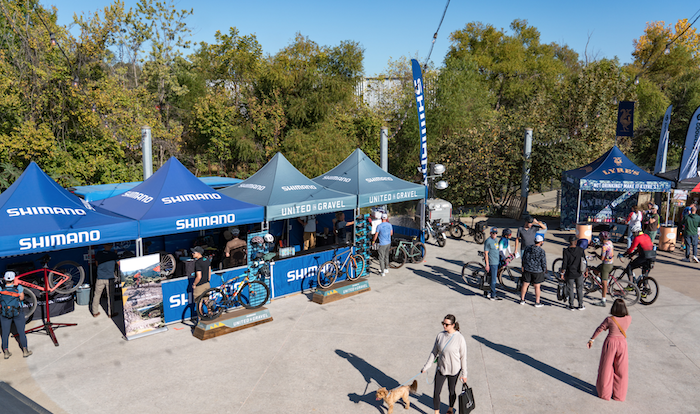
A phased approach can also make sense. If a 10’x20’ feels like too big of a leap, a 10’x15’ adds meaningful operational flexibility while keeping the step manageable.
For brands attending one or two flagship events each year, temporarily expanding to a larger footprint can help validate performance before committing to a permanent upgrade. For example, we offer rental options on some of our products that allow you to trial having a larger branded frame tent, event dome, or truss structure.
Recommended Resource: TentCraft's 2026 Inspiration Guide - See How Other Brands Design Activations
When Staying with a 10’x10’ Canopy Tent Actually Makes Sense
Upgrading isn’t always necessary, and you certainly don’t want too much tent if the event's foot traffic is limited or your activation needs don't require it.
A 10’x10’ canopy tent is still a smart choice when:
-
Your goal is agility and portability
-
You’re testing a brand new event
-
Need a small sampling station
-
You’re attending lower-traffic community events
The key is alignment. If traffic is steady but manageable and your goals are focused, a smaller tent performs well.
But if you’re consistently experiencing crowding, rushed conversations, or missed opportunities, the limitation may not be your team, it may be your footprint.
That’s when the conversation shifts from budget to capacity.
Conclusion: It’s a Capacity Decision
Choosing between a 10’x10’, 10’x15’, 10’x20’ or even larger branded footprint isn’t just about square footage, it’s about your event activations potential.
Don’t let a limited tent size hold you and your team back, instead, choose an event structure that will set the stage for your team to exceed your goals.
If you’re feeling the squeeze on your current footprint size or simply want to explore options with our team of event experts, you can request a quote and we’ll get right back to you. Or you can call us directly and speak to someone immediately by calling: (800) 950-4553.