
In our experience, cost savings in the event world come from two types of seasoned brand teams:
-
The Type-A, Well-Organized Planners & Project Managers
-
The Legal Savvy, Loophole-Finding, Technicality-Minded Event Professionals
You might find that your team operates in both lanes, in which case, cheers to you! 🍻
As we’ve watched teams get increasingly savvy around costs and budgets this year, we thought we’d dedicate this month’s newsletter to a few real customer examples you can draw inspiration from.
Tl;dr - For this newsletter, we're covering specific ways customers & the TentCraft crew are helping teams avoid unnecessary & unexpected costs:
-
A Clever Way to Avoid Expensive Insurance Costs
-
Knowing Municipality Permitting Reqs Can Save Thousands
-
Ship Together, Ship Early, Know Your Deadlines
1. Insurance Costs, Awnings, and Semi-Trailer Activations 🏁
Most of us have been at an outdoor event (especially in racing) and seen a brand activation built around a semi-truck and trailer setup.
It makes sense for the teams executing busy, multi-stop tours where the transport of race vehicles and marketing materials becomes part of the activation itself.
One of the staple elements of these setups is an attached, custom-printed awning that teams will roll out for branded shade over their footprints.
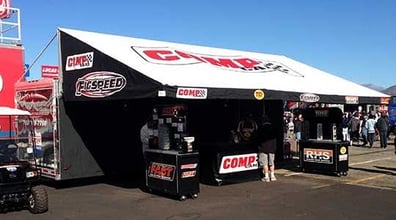
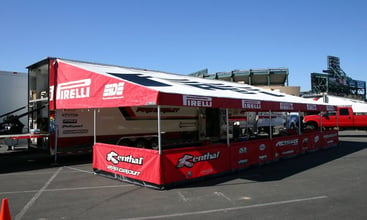
What some of the brands we work with are discovering, however, is that the specialty attachment insurance added to the costs of truck-and-trailer setups can make the awning expensive enough to reconsider.
So, what are they doing instead?
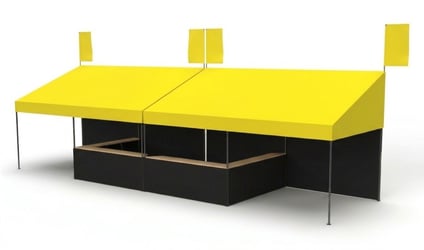
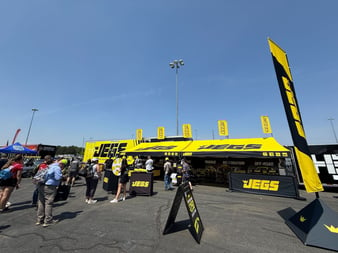
To preserve the same activation style and footprint at a fraction of the cost, some teams are turning to heavy-duty custom pop-up tents with backwalls, specifically our MONARCHSTOREFRONTS with an awning-style roofline.
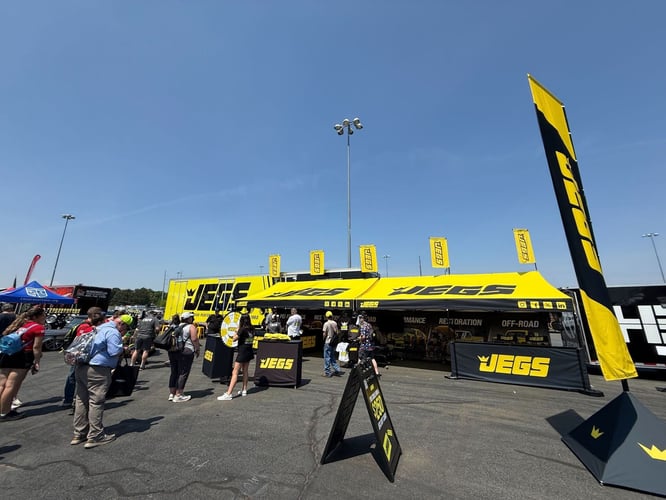
Below, you’ll see both a rendering of the Storefront shape and a real-world customer example from JEGS. You can also watch our rep, Logan, walking us through the JEGS Setup.
2. Permitting + Municipality Infrastructure Rules 🧐
Experienced event and brand teams, especially those activating at the same events year after year, become invaluable sources of insight when it comes to navigating municipality rules that can quickly create unexpected event costs.
As we all come to learn, two neighboring towns, states, etc. can have completely different standards for what qualifies as a permanent structure, what fire code requirements apply, and what’s needed to stay compliant - so having people on your side to help you navigate these can save you thousands of dollars.
For example, we’ve worked with many cycling brands that regularly attend the Life Time Sea Otter Classic in Monterey, California.
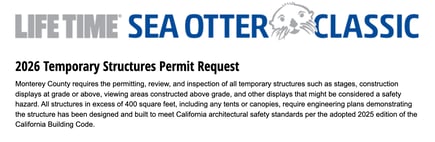
Monterey County requires that any structure larger than 400 square feet include specific engineering plans (exact language below).
So, how do we help navigate this?
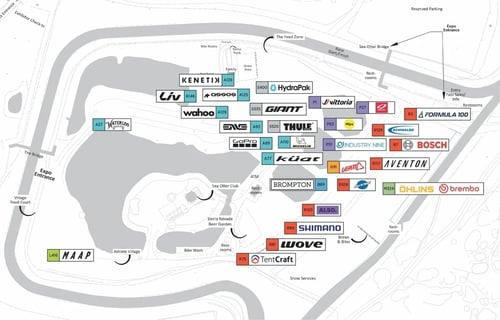
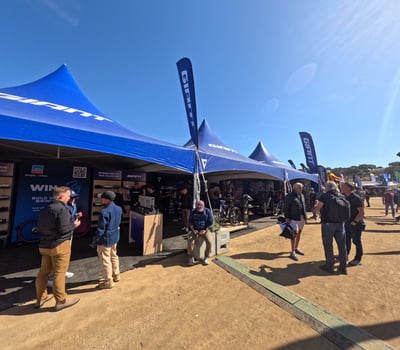
We help a lot of brands activating at Sea Otter that have footprints much larger than 400 square feet (Customer Map Below).
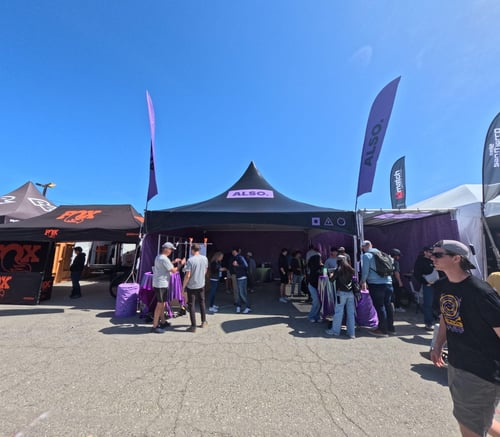
What we learned and passed along to our customers to help them save on the cost of engineering stamps is that you can connect multiple structures together without needing that permit as long as no individual structure is larger than 400 square feet.
Example activations:
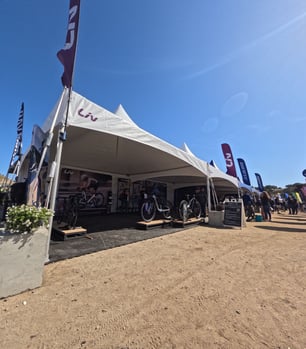
Giant and Liv’s 20’x100’ Footprint Leverages 5 20’x20' E-Series Frame Tents.
ALSO. Activated in a 20’x30’ Space with a 20’x20’ E-Series Frame Tent and a 10’x20’ Custom Shade Structure.
3. Shipping and Logistics - Be Early and Organized
Anyone who’s spent enough time in the event world knows how quickly shipping costs, drayage fees, and logistical complexity can add up.
The later you wait to ship and the more complicated the receiving process is for the venue, the higher those costs tend to climb.
So, we thought we’d share a few of the ways we’ve seen teams reduce those expenses.
Group Shipments or Shared Deliveries
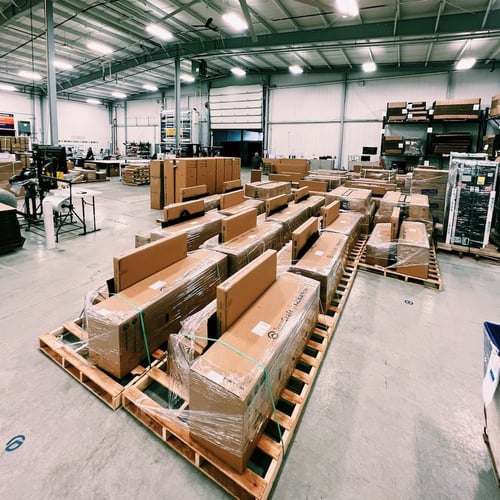
If you know another brand exhibiting at the same event is also receiving assets from TentCraft, let us know. We’ll do our best to palletize shipments together to help reduce costs for everyone involved.
And when the order volume is large enough, we can also coordinate a dedicated truck to deliver directly to the venue. In addition to lowering shipping complexity, it can improve the chances of hitting tight delivery windows.
We actually did this for Sea Otter last month, coordinating deliveries across multiple customer orders.
Order As Early As You Can
Most event teams do their best to place orders early for custom event assets. But we’re all human, and sometimes deadlines sneak up fast, leading to a last-minute rush order.
There’s no need to repeat what most of you already know about expedited shipping costs. But it’s helpful to look at just how dramatically tight timelines can impact pricing.
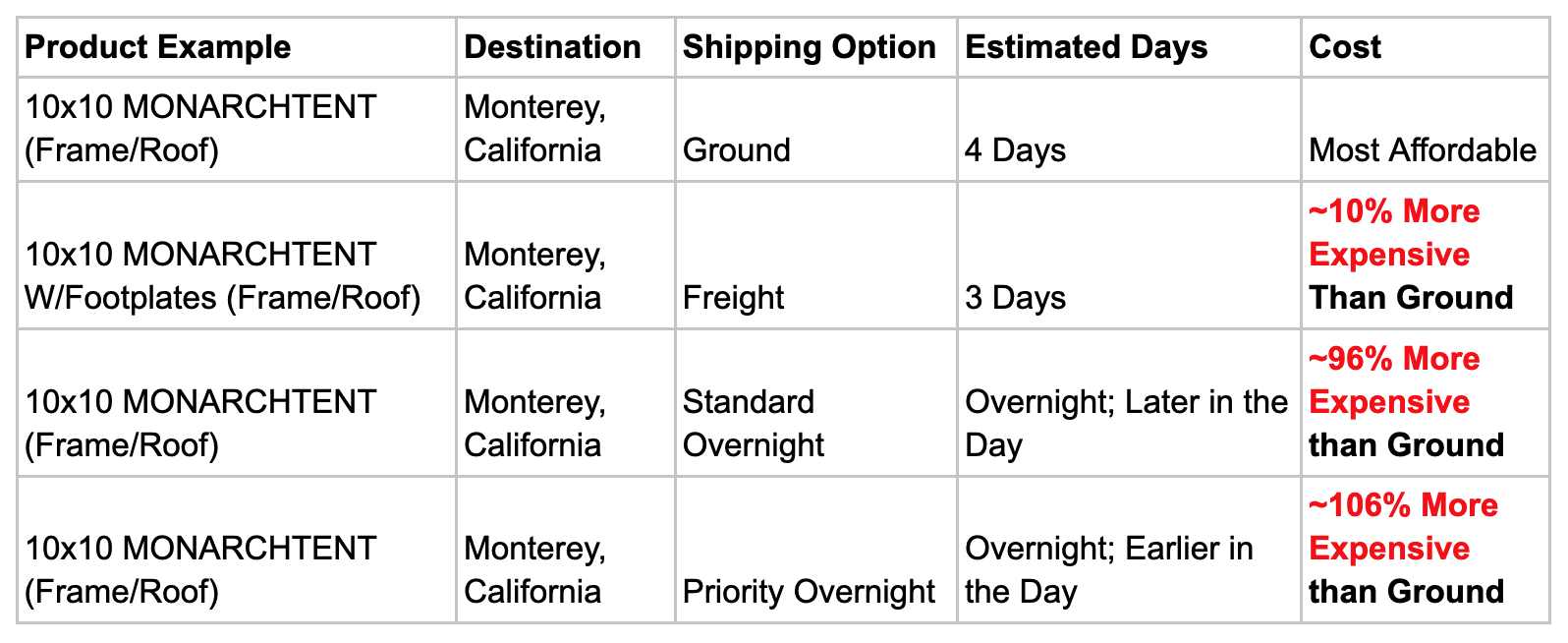
The table below compares FedEx shipping scenarios for a 10’x10’ MONARCHTENT traveling from Traverse City, Michigan to Monterey, California.
Important Caveats and Takeaways:
-
Compared to the most economical option (ground shipping), overnight shipping can cost anywhere from 96% to 106% more. It’s also worth noting that shipping rates can fluctuate significantly depending on origin, destination, timing, and carrier demand.
-
Freight shipping naturally comes at a higher cost because it’s designed for larger, heavier orders. In the example above, the freight quote included footplates, which added additional weight and shipping complexity.
-
While both ground and freight shipping may provide estimated delivery windows of 3–4 days, those timelines are not guaranteed. If your order absolutely must arrive by a specific date on a tight timeline, logistics teams will typically recommend overnight shipping, since it’s the only option backed by a delivery guarantee.
Pay Close Attention to ALL the Deadlines
In a similar vein to ordering early, most shows come with a long list of important deadlines you’ll want to stay ahead of.
Experienced event pros already know this, but for those newer to the industry, strong partners can make a huge difference.
Working with teams that are invested in your success, and proactive about communicating timelines, can help you avoid unnecessary stress and costs. Event organizers will usually provide these deadlines well in advance, too.
To continue the Sea Otter theme we’ve carried throughout this newsletter, below is an example of some of the key deadlines we tracked for customers attending the event:
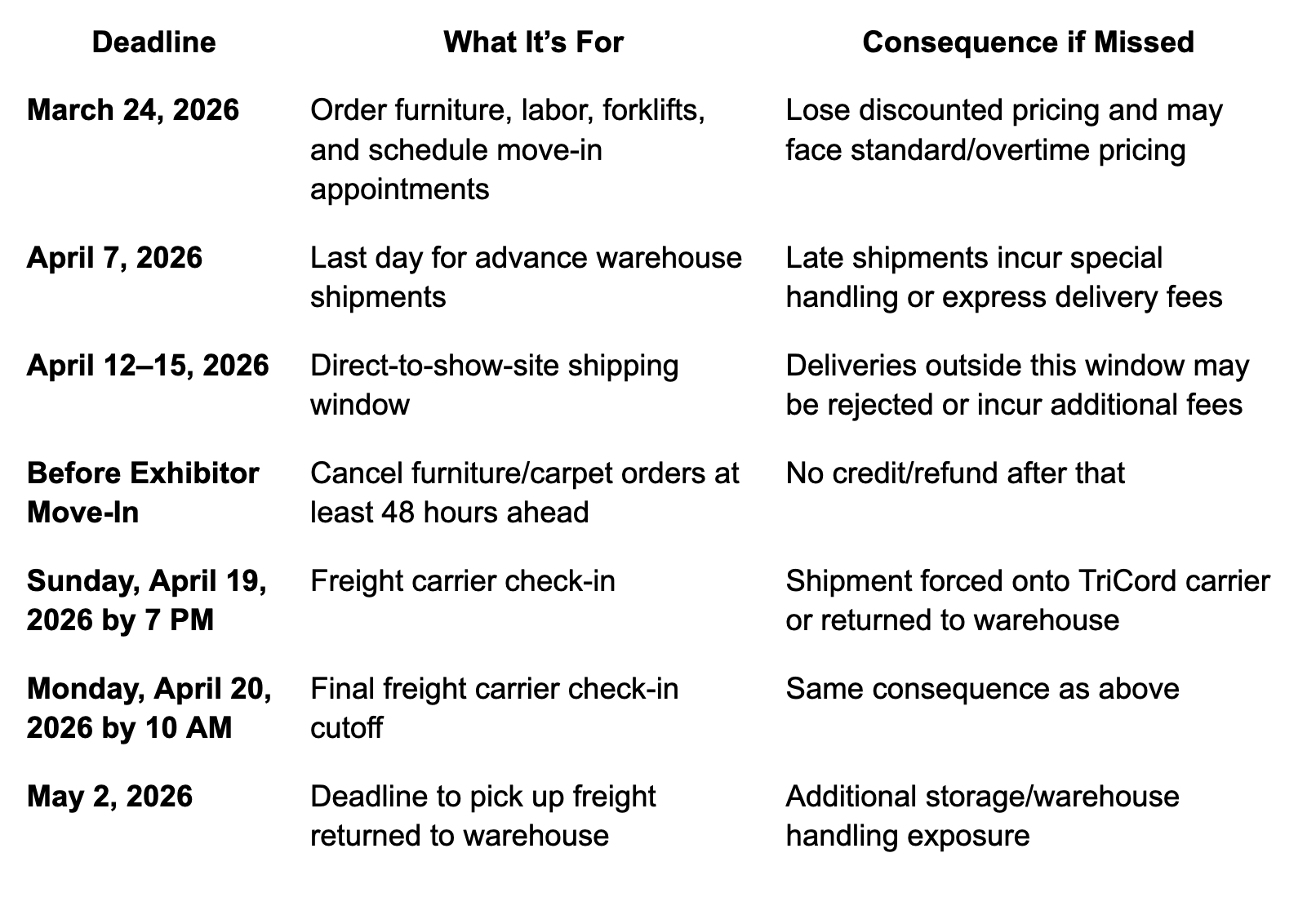
*Link to the official Tricord Document with this information in it if you’d like to see it yourself.
Monthly Staff Picks - Reads, Watches, & Listens We Think You Might Like:
Anthropic is paying up to $400,000 a year for an events role? - By Andrew Yeng on LinkedIn
The Spaghetti Policy for All MLB Teams - By the Sickos Committee in The Sickos Sentinel Newsletter
Is AI Behind a $2.5 Trillion Event Industry Boom? - By James Crane on Instagram
The Trillion-Dollar Experience Economy And The Growing Execution Gap - By Kate Hardcastle on Forbes
Coachella 2026: See Inside the Brand Activations Everyone Was Talking About - By Claire Hoffman on BizBash