
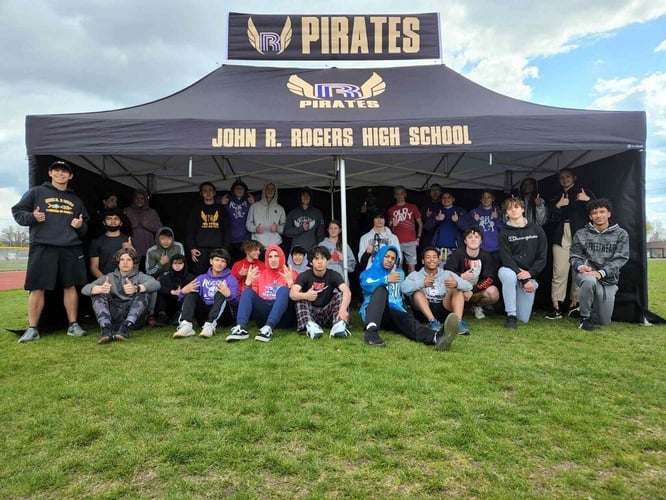
Whether you're shopping for portable team tents to cover your football sidelines, give your cross country runners a home base, or pull double duty across multiple school activities, you likely have a clear idea of how you want to use them.
Figuring out exactly what to order is where things get tricky. How big should your tent be? Do you need walls? What's the difference between pop-up tent frames, and which one makes the most sense for your school's budget?
These are questions we regularly help schools work through at TentCraft. So, we've put together this guide to make those decisions easier.
Click the Following Bulleted Items to Take You To The Section You're Interested In:
-
Team applications: Finding the right setup for your sport or program
-
Tent sizes: Understanding how much space you need for team members, coaches, and equipment
-
Frame styles and construction: Comparing durability, portability, and ease of setup
-
Weather protection: Configuring your shelter for sun, rain, wind, and changing conditions
-
Customization: Incorporating school colors, logos, and accessories to showcase school spirit
-
Purchasing options: Exploring school purchase orders, sponsorships, and other funding options
Along the way, we'll share real examples of how schools use TentCraft shelters and explain which products and configurations make sense for different needs.
Portable Team Shelters for Different Sports & Applications
One of the great things about portable team shelters is how many different jobs they can handle. We've worked with schools that need dedicated sideline coverage, a reliable gathering spot for meets, and versatile tents that travel between sports, school cultural events, STEM programs, and other activities throughout the year.
While many of these teams use the same types of pop-up tents, the way they're configured can look quite different depending on the sport.
Portable Team Shelters for Different Sports & Applications
One of the great things about portable team shelters is how many different jobs they can handle. We've worked with schools that need dedicated sideline coverage for football games, a reliable gathering spot for cross country meets, and versatile tents that travel between sports, school events, and other activities throughout the year.
While many of these teams use the same types of pop-up tents, the way they're configured can look quite different depending on the sport.
Sideline Shelters for Football, Soccer & Other Field Sports
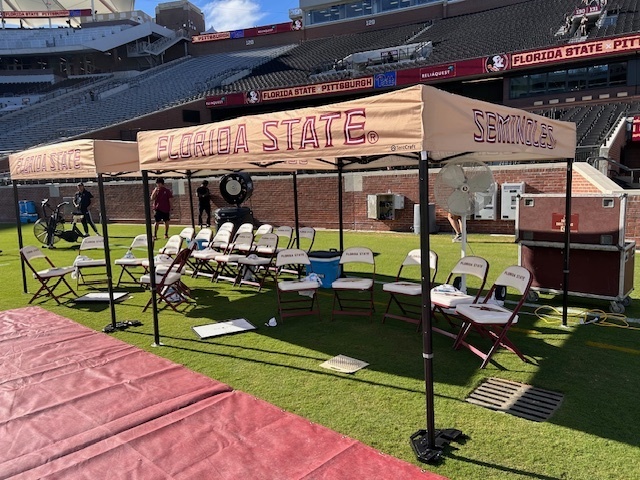
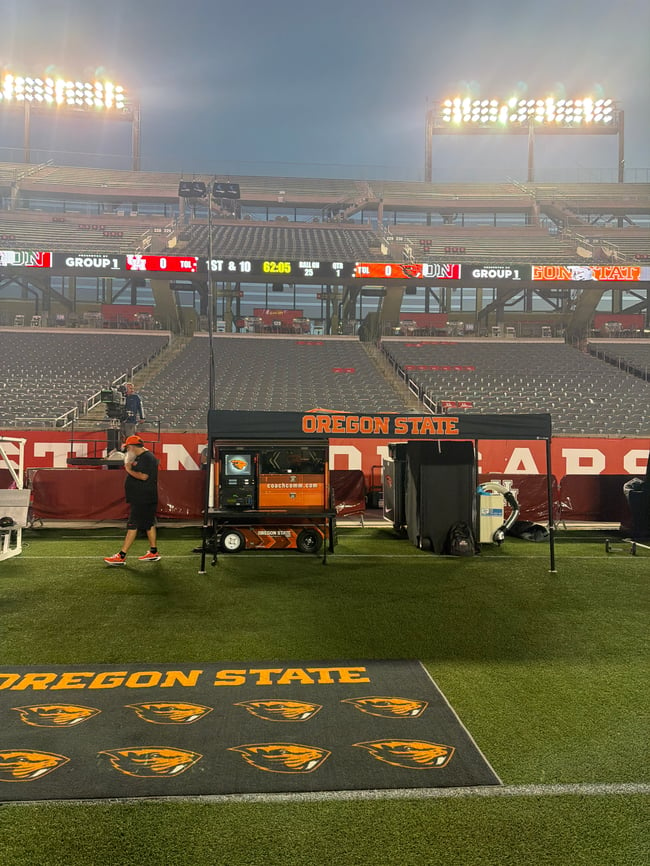
For football, soccer, lacrosse, and other field sports, sideline shelters give players and coaches a designated space to get out of the sun, take a break, regroup as a team, and even utilize back and side walls for increased privacy in the event of injuries or strategy conversations.
The biggest considerations usually come down to available sideline space, unobstructed visibility, and making sure players can easily move in and out of the shelter.
|
Primary Consideration |
Recommended Features & Configurations |
|
Unobstructed views of the field |
Low-profile MONARCHFLATROOF structures help maintain visibility for spectators and coaches. |
|
Easy access for athletes |
Open-sided configurations allow players to enter and exit from multiple directions. |
|
Room for players and equipment |
Larger footprints, such as 10'x20', provide space for benches, gear, and groups of athletes. |
|
Frequent use during the season |
Heavy-duty MONARCHTENT construction is worth considering for programs regularly setting up, transporting, and taking down their shelters - especially if student athletes will be responsible for set up and teardown as they tend to be harder on equipment than facilities staff in our experience. |
Cross Country & Track and Field Team Shelters
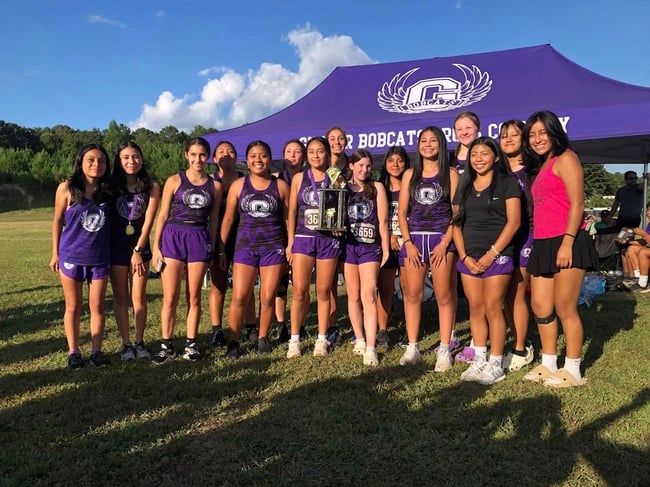
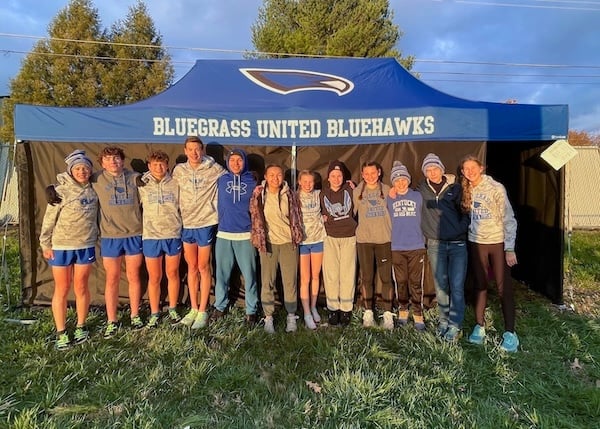
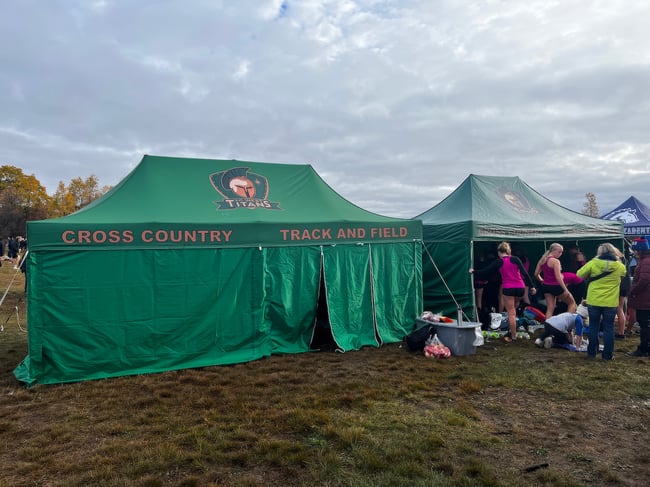
If you've attended a large cross country or track meet, you've probably seen rows of team tents lining the grounds. These shelters serve as a home base where athletes gather before and after events, store their bags, meet with coaches, and spend time with teammates.
Because meets often last several hours during the shoulder seasons, it's worth thinking about how your shelter will function throughout the day, especially when the weather changes.
|
Primary Consideration |
Recommended Features & Configurations |
|
A recognizable team home base |
Custom-printed roofs, school logos, and peak flags help athletes and families identify their team's shelter among dozens of others. |
|
Protection from changing weather |
Removable sidewalls, back walls, and zipper doors allow teams to adjust coverage as conditions change. Ballasting options become important for keeping tents secured to the ground during windy meets. |
|
Room for athletes and equipment |
10'x20' canopy tents are a popular starting point, with larger footprints available for bigger programs. |
|
Transportation between meets |
Portable pop-up frames, wheel kits, and compatible transport bags help teams move their shelter between schools and competition venues. |
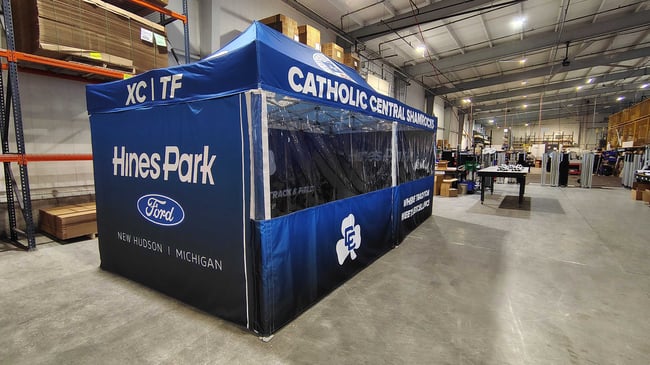
Customer Example: Detroit Catholic Central
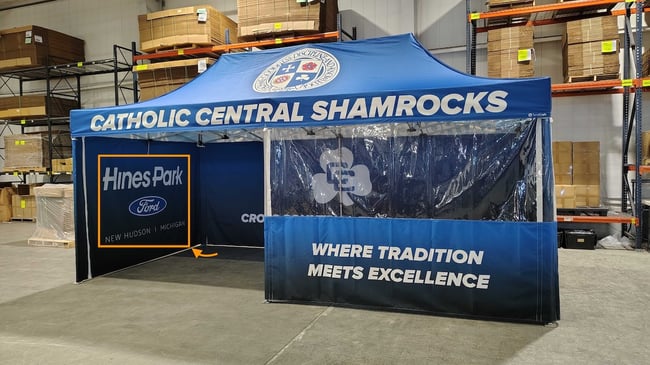
Detroit Catholic Central uses a custom 10'x20' medium-duty pop-up tent (mightyTENT) with walls and a zipper door for its cross country and track and field programs. The setup provides a recognizable team home base with flexibility to adjust coverage for different conditions.
You can check out their case study here for the exact order information:
How Detroit Catholic Central Created the Ultimate Team Shelter for Cross Country & Track
Shade Shelters for Tennis, Pickleball & Golf Teams
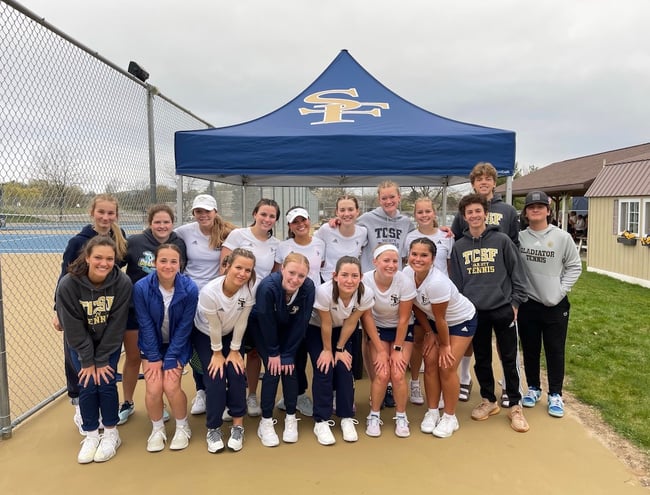
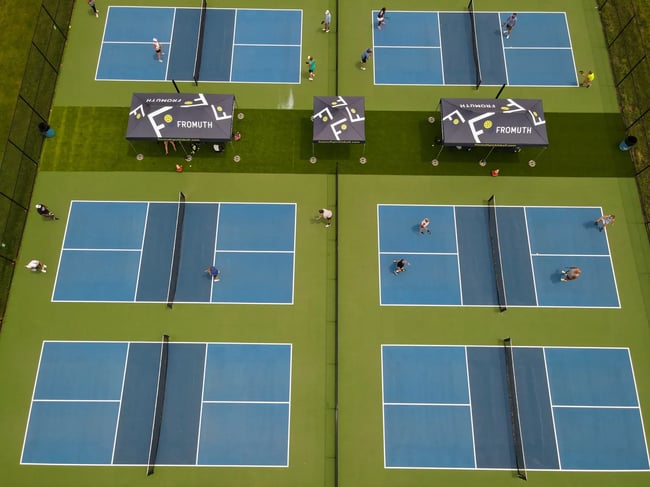
If your team competes in outdoor sports like tennis, pickleball, or golf, having a dedicated shaded area can make long tournament days more comfortable.
Unlike traditional sideline sports, where visibility and quick access to the field might be priorities, these teams often need a place where players can get out of the sun between matches, grab water, meet with coaches, and keep personal belongings covered.
|
Primary Consideration |
Recommended Features & Configurations |
|
Shade during long outdoor events |
A canopy roof provides overhead shade, while optional sidewalls can help block low-angle sun. |
|
Airflow and ventilation |
Open-sided configurations encourage air movement while providing shade. Also consider walls made of fabrics like jersey mesh that allow air to more easily pass through. |
|
Space for seating and personal equipment |
10'x10' or 10'x15' footprints can accommodate chairs, coolers, golf bags, or other team essentials, depending on the layout. |
|
Easy relocation between events |
Portable pop-up frames and transport bags allow teams to bring their shelter to different courses, courts, and tournament venues. |
Multi-Purpose Team Shelters for School Athletics
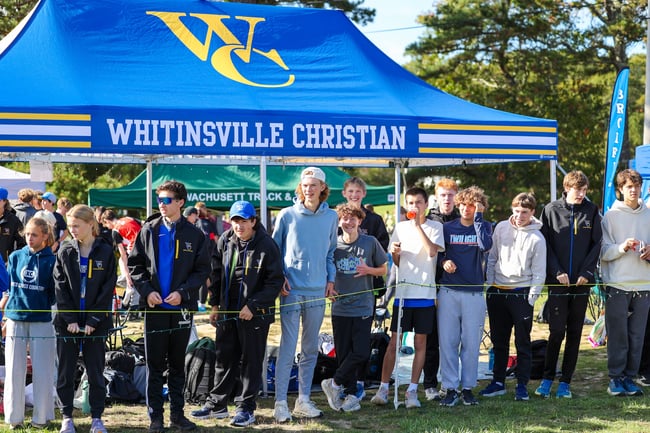
If your school supports several athletic programs, purchasing a separate shelter for every team may not be practical. A shared tent can be a useful investment for athletic departments that want dependable coverage across different sports and school activities.
For a shared tent, school-wide branding is especially useful because it can represent every program that uses it.
|
Primary Consideration |
Recommended Features & Configurations |
|
Branding that works across multiple teams |
School-wide logos, mascots, and colors allow the same shelter to represent football, soccer, track, and other programs without sport-specific graphics. |
|
Flexibility for different activities |
Removable walls and adaptable layouts allow schools to reconfigure their shelters for team gatherings, registrations, fundraisers, and other activities. |
|
Multiple people handling setup |
Durable frames and straightforward setup procedures are especially important when different coaches, students, or volunteers are responsible for the tent. |
|
Year-round transportation and storage |
Consider frame weight, packed dimensions, transport bags, and available school storage space before purchasing. |
Indoor Shelters & Displays for Robotics and Other School Teams
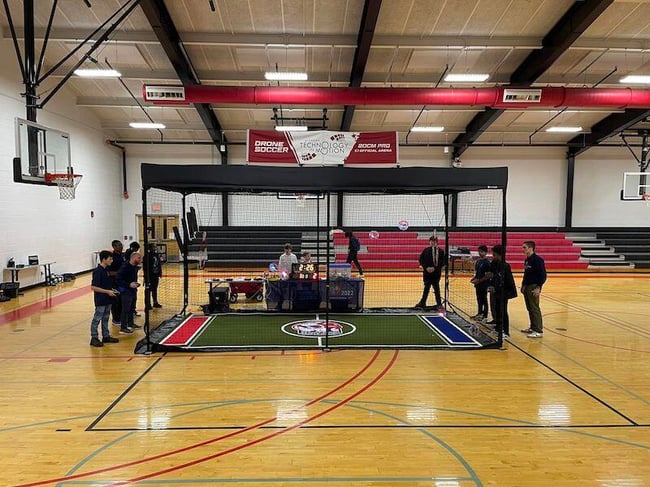
Not every team competition happens outdoors. Robotics teams, STEM organizations, and other student groups often participate in indoor competitions, exhibitions, and school showcases where a branded space can help establish their presence.
For these applications, the shelter may serve as a team headquarters, display area, or designated gathering space rather than providing weather protection.
Indoor venues also introduce a different set of considerations.
Before choosing a tent for an indoor competition, check with the event organizer about permitted structures, ceiling clearance, fire-safety requirements, and available floor space.
|
Primary Consideration |
Recommended Features & Configurations |
|
Low ceilings and height restrictions |
Low-profile structures like the MONARCHFLATROOF may be worth exploring when traditional peak-style tents are too tall. |
|
Compact event footprints |
Smaller tents, such as 10'x10' pop-up canopy tent configurations, can accommodate designated team areas where permitted by the venue. |
|
Team branding and identification |
Custom-printed roofs, walls, banners, and rigid signage can create a recognizable presence at crowded competitions and exhibitions. |
|
Displaying projects and equipment |
Open-sided configurations can provide room for tables, displays, and equipment access, depending on the event layout. |

Determining What Size Portable Team Shelter You Need
When it comes to choosing a team tent size, the number of athletes you need to cover is a good starting point. But you'll also want to account for everything else taking up space, from backpacks and coolers to benches, folding chairs, and equipment.
For example, a cross country team with 25 runners coming and going throughout a meet has different space requirements than a football team planning to keep a row of players seated under its sideline shelter.
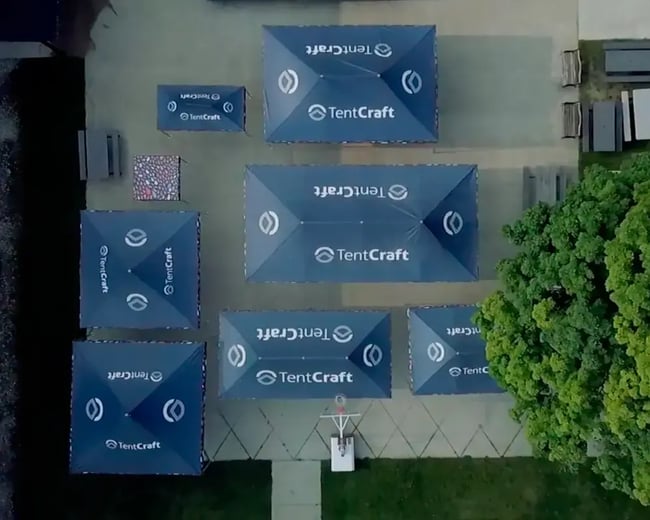
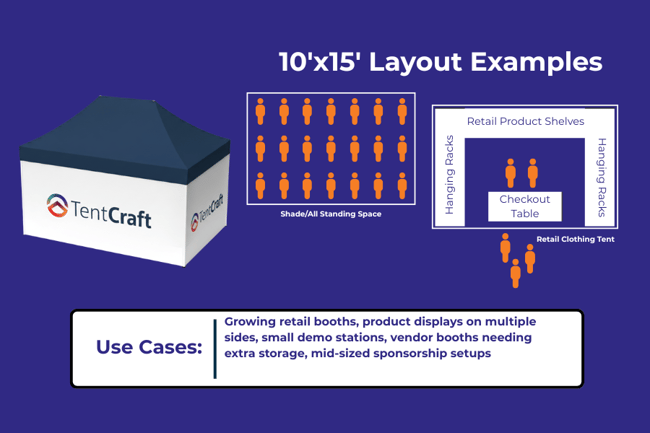
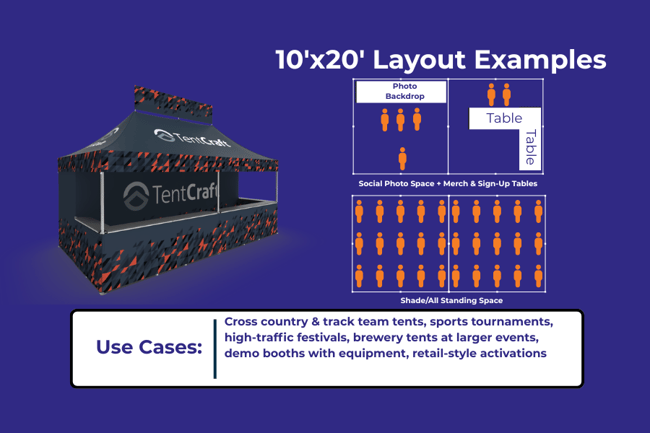
To help you narrow down your options, here's a look at three of TentCraft's most popular portable team tent sizes.
Recommended Resource: You can also explore our complete canopy tent sizing guide for additional footprints and sizing recommendations.
Comparing Popular Portable Team Tent Sizes
|
Tent Size |
Covered Area |
Estimated Standing Capacity |
Packed Dimensions* |
|
10'x10' |
100 sq. ft. |
12–15 people |
15" x 18" x 65" |
|
10'x15' |
150 sq. ft. |
16–22 people |
15" x 30" x 65" |
|
10'x20' |
200 sq. ft. |
23–28 people |
15" x 30" x 65" |
*Packed dimensions are based on TentCraft's MONARCHTENT Standard Peak specifications and vary by tent model, roof style, and configuration. These measurements are especially useful when planning how much storage space your shelter will require and whether it will fit in your team's buses, trailers, or equipment vehicles. Standing capacities are estimates for open spaces without furniture or equipment.
How Much Space Does Your Team Actually Need?
Before settling on a size, think through a typical competition day.
How many athletes will need coverage at the same time?
Your entire team might include 30 athletes, but that doesn't necessarily mean all 30 need to fit under the tent simultaneously. Consider whether players will be rotating through the shelter, gathering for team meetings, or spending extended periods inside.
What equipment needs to fit under the tent?
Backpacks, coolers, athletic bags, folding tables, and benches can take up a surprising amount of room. If you're planning to keep equipment under cover, account for that space before estimating how many people will fit.
Will athletes need to move in and out frequently?
A shelter that's packed with people and equipment can become difficult to navigate. For sideline teams and busy track meets, leaving clear pathways and accessible entry points is worth considering.
Are there restrictions on where you can set up?
Some schools and competition venues have designated tent areas or limited sideline space. Before choosing a footprint, make sure it fits the locations where your team expects to use it.
When a Larger Team Tent Makes Sense
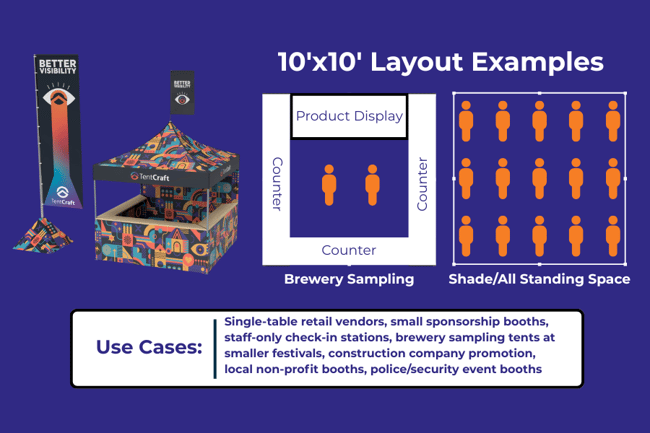
For larger athletic programs, one or multiple 10'x20' pop-up tents are a popular choice because its rectangular footprint makes it easier to organize seating, equipment, and a designated team gathering area while having plenty of room for athletes as they filter in and out of the tent canopy area.
If your team needs more coverage, TentCraft can also help you explore larger footprints or connected tent configurations. The right size comes down to how you'll use the space, rather than headcount alone.
Choosing the Right Team Tent: Frame Styles & Construction
Next, let's talk about frame construction. How your team handles, transports, and uses its tent can influence whether a medium-duty or heavy-duty frame makes the most sense.
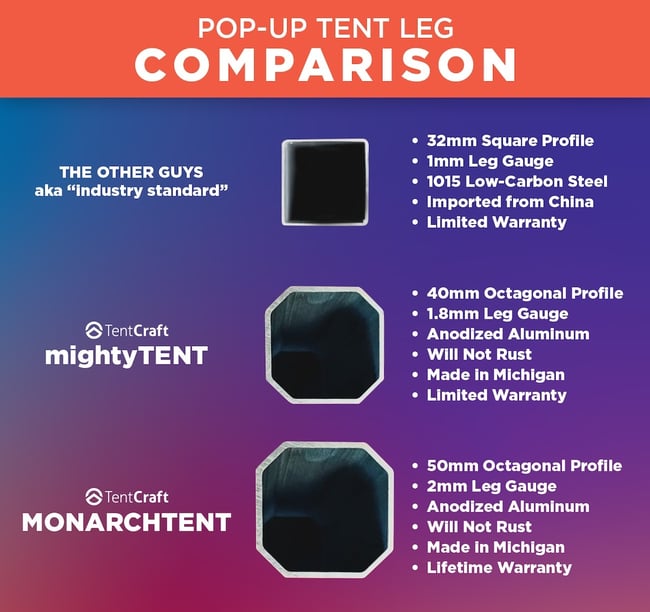
At TentCraft, our two primary pop-up tent collections are the medium-duty mightyTENT and heavy-duty MONARCHTENT. Both feature aluminum frames, custom-printed canopies, and portable pop-up designs, but there are important differences in their construction and long-term durability.
Why Durability Matters
School tents tend to live pretty busy lives. They're loaded into trailers alongside athletic equipment, transported between competitions, and set up and taken down by students, coaches, and volunteers throughout the year.
And let's face it, student athletes aren't always gentle with equipment. When different people are responsible for handling the same tent, having a frame that can stand up to the occasional rough treatment becomes especially important.
A few realities worth considering:
-
Different people handling setup: Students, coaches, parents, and volunteers may all take turns setting up and packing away the tent, with varying levels of experience and care.
-
Frequent transportation: Frames and accessories may travel in school buses, equipment trailers, or athletic department vehicles alongside other gear.
-
Repeated setup and takedown: A shelter used for practices, meets, games, and school events experiences wear every time it's assembled, collapsed, and stored.
-
Changing weather conditions: Athletic programs often operate in exposed outdoor spaces where proper anchoring, durable construction, and weather awareness are important.
-
Limited replacement budgets: Investing in a durable frame can make sense for schools hoping to use the same shelter for many seasons rather than replacing it prematurely.
These are all worth considering when deciding whether a medium-duty or heavy-duty tent frame makes the most sense for your program.
mightyTENT vs. MONARCHTENT: What's the Difference?
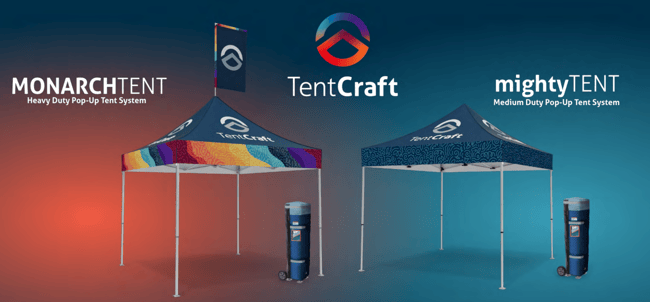
Here's how TentCraft's two primary pop-up tent collections compare:
|
Feature |
mightyTENT |
MONARCHTENT |
|
Frame classification |
Medium-duty |
Heavy-duty, commercial-grade |
|
Frame construction |
Anodized aluminum with engineered polymer connections |
Heavy-duty anodized aluminum with machined aluminum connections |
|
Leg profile |
40mm octagonal |
50mm octagonal |
|
Leg wall thickness |
1.8mm |
2mm |
|
Corrosion resistance |
Rust-resistant aluminum |
Rust-resistant aluminum |
|
Manufacturing |
Made in Michigan |
Made in Michigan |
|
Frame warranty |
5 years |
Lifetime |
|
Canopy warranty |
7 years |
7 years |
|
Wind ratings |
N/A |
Engineer-certified wind ratings available |
|
Best suited for |
Schools balancing durability, customization, and budget |
Schools prioritizing heavy-duty construction and long-term use |
For a more detailed comparison of the two models, including their frame construction and included accessories, check out our MONARCHTENT vs. mightyTENT comparison guide.
For programs that use their tents occasionally, mightyTENT offers a professional-grade option at a lower price point. For schools that expect frequent use, rougher handling, and want TentCraft's heaviest-duty pop-up construction, MONARCHTENT is worth considering for the additional investment.
Standard Peak vs. Flat-Roof Team Tents
Beyond frame construction, you'll also want to consider your tent's roof style. For most school athletic programs, the choice comes down to a traditional standard peak or a low-profile flat roof.
Both options are available in TentCraft's medium-duty mightyTENT and heavy-duty MONARCHTENT collections, so you can choose your preferred frame construction independently of your roof style.
Here's how the two compare:
|
Consideration |
Standard Peak |
Flat Roof |
|
Common applications |
Cross country meets, tournaments, general team events |
Athletic sidelines, indoor activities, height-restricted venues |
|
Field visibility |
Taller roof profile that may obstruct certain sightlines |
Lower roof profile helps maintain visibility |
|
Overall height — mightyTENT (10'x10' and 10'x20') |
11'4" |
8'5" |
|
Overall height — MONARCHTENT (10'x10' and 10'x20') |
11'10" |
8’5” |
|
Branding opportunities |
Elevated canopy offers a prominent surface for school logos and graphics |
Lower-profile canopy with custom branding options |
Height measurements reflect published product specifications without optional flags or banners. Overall height can vary by product and configuration.
If you're looking for a versatile tent that travels between athletic events, a standard peak is a great place to start. If your shelter will be positioned along crowded sidelines or used in spaces with height restrictions, it's worth exploring a flat-roof configuration.
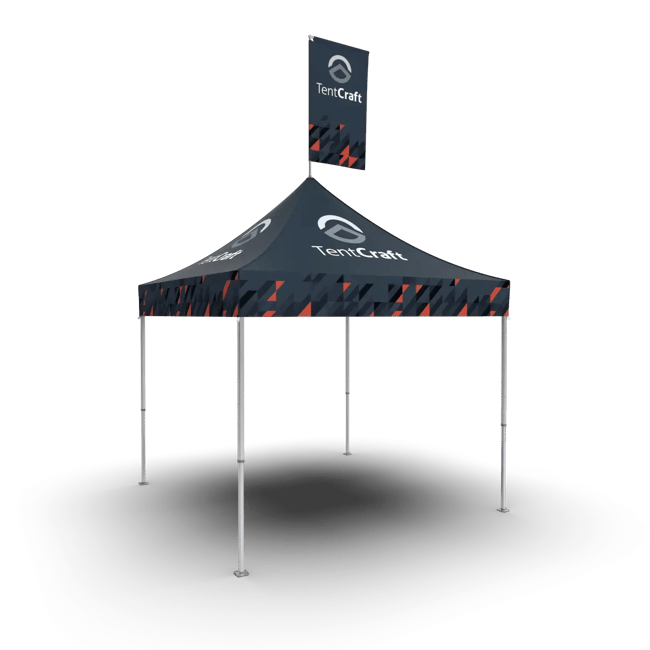
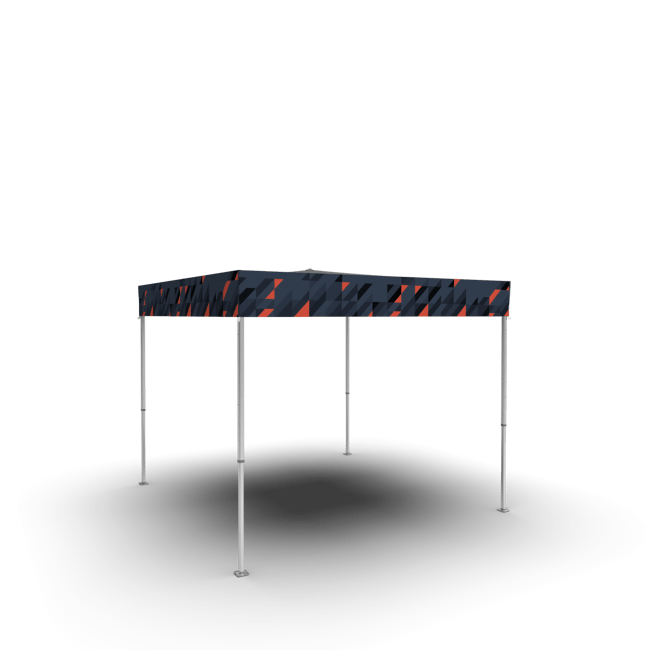
Looking for a Different Roof Style?
Most athletic programs choose standard peaks or flat roofs, but the MONARCHTENT collection includes specialty options like gable, storefront, MONARCHREACH, and MONARCHHEX. If your school is looking for a more distinctive setup, explore the full lineup of roof styles.
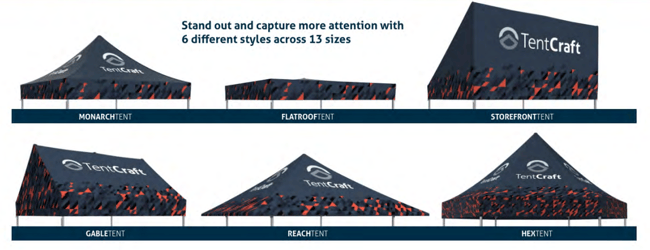
Explore TentCraft's Pop-Up Tent Collection
Configuring Your Team Setup for Weather Protection
If your team spends much time competing outdoors, you know how quickly the weather can change. One weekend you're trying to keep athletes cool during a hot afternoon tournament. Next, you're looking for ways to keep everyone and their equipment dry during a rainy meet.
Fortunately, portable team tents can be configured with different combinations of walls, doors, and accessories to accommodate a range of conditions.
Here are a few things to consider when planning your setup.
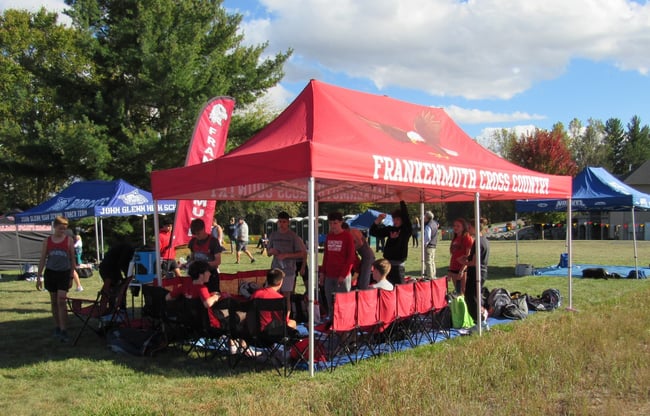
Sun & Heat: Finding the Right Balance of Shade and Airflow
For warm-weather sports like tennis, golf, and soccer, providing shade is often the first priority. A standard pop-up tent with an open-sided configuration gives athletes a place to escape direct sunlight while allowing air to circulate.
Depending on where the sun hits throughout the day, you may also want to consider adding a sidewall to block direct sunlight coming in from the side.
Popular configurations to consider:
-
Open-sided canopy: Provides overhead shade while allowing airflow from all directions.
-
Single sidewall: Adds protection from low-angle sunlight while keeping the remaining sides open.
-
Half walls: Provide partial coverage or separation without fully enclosing the shelter.
Keep in mind that shade doesn't eliminate the risks associated with extreme heat. Athletes still need adequate hydration, rest, and appropriate heat-safety precautions.
Rain & Precipitation: Keeping Athletes and Equipment Covered
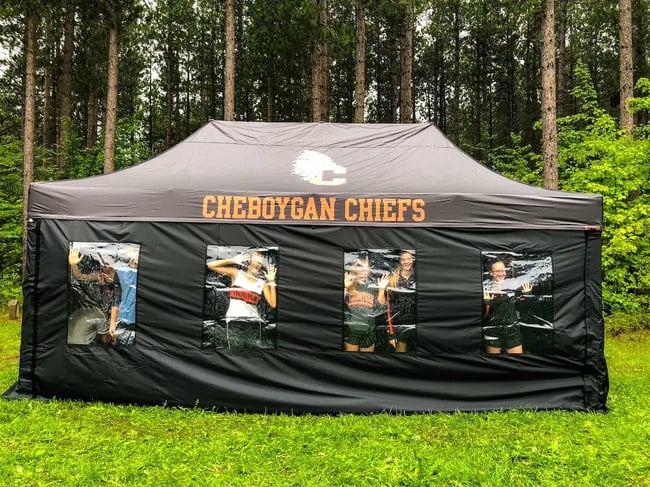
Rain protection becomes especially important for sports like cross country and track, where athletes may spend hours at a meet waiting for their next event.
While the canopy provides overhead coverage, adding sidewalls and doors can help limit wind-driven rain from entering the shelter.
Popular configurations to consider:
-
Back wall: Adds coverage along one side while keeping the front open for easy access.
-
Multiple sidewalls: Provide additional protection when rain is blowing in from different directions.
-
Full walls with a zipper door: Create a more enclosed space for athletes, bags, and equipment while maintaining a designated entry point.
The right setup depends on how much access your team needs and where rain typically enters the shelter. Remember that portable tents are not completely weatherproof, particularly during heavy or wind-driven rain.
Wind: Anchoring and Safe Operation
Whether you're setting up beside a football field or at an open cross country course, wind is an important consideration.
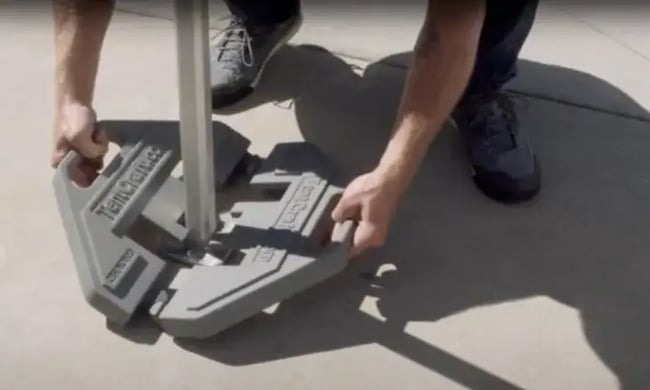
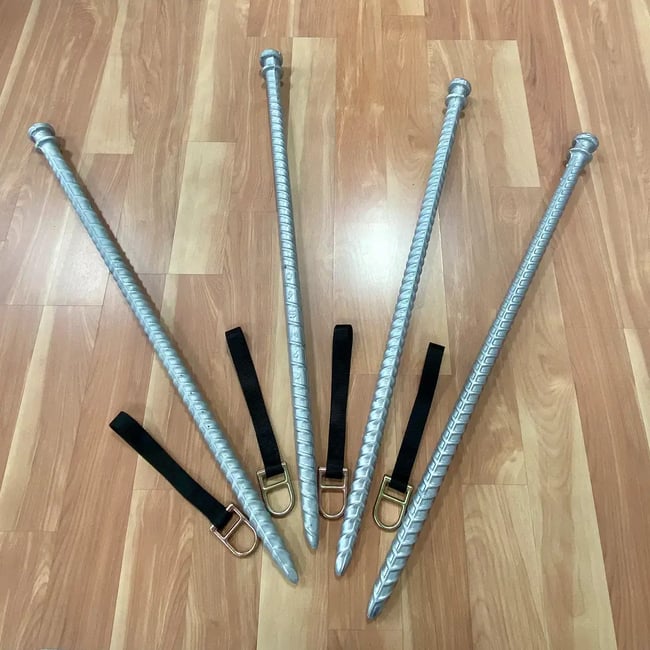
Proper anchoring is essential for portable shelters, regardless of whether you're using a medium-duty mightyTENT or heavy-duty MONARCHTENT.
Your anchoring method will depend on the surface and venue requirements. Stakes may be appropriate for certain ground conditions, while approved weights or ballast systems may be needed on pavement or other surfaces where staking isn't possible. Always follow the anchoring requirements for your specific tent.
There are a few important things to remember:
-
Choose the right anchoring method: Grass, turf, pavement, and indoor surfaces may have different installation requirements.
-
Follow your tent's specific setup guidelines: Anchoring requirements and documented wind limitations vary by model and configuration.
-
Monitor changing conditions: Sidewalls can increase the amount of wind pressure on a structure, and even properly anchored tents must be taken down when conditions exceed their safe operating limits.
Never use a portable team tent as shelter during lightning, severe storms, or other dangerous weather.
Recommended Reading: The 5 Best Ways to Anchor a Canopy for High Winds (Whether on Sand and Soil or Concrete)
Cooler Weather: Creating a More Enclosed Team Space
Fall athletics often bring chilly mornings, wind, and long stretches of waiting between events.
For these conditions, adding walls can help reduce direct exposure to wind and create a more protected gathering space for athletes and coaches.
A three-wall configuration can block wind from several directions while leaving the front open. Teams looking for additional coverage can consider a fully enclosed configuration with a zipper door.
Just remember that tent walls aren't insulation, and an enclosed pop-up tent shouldn't be treated as a heated indoor space. Maintain appropriate ventilation and never use unapproved heaters or open flames inside.
Customizing Your Team Shelter for School Spirit
Once you've figured out the size, frame, and configuration of your team shelter, it's time for the fun part: making it look like it belongs to your school.
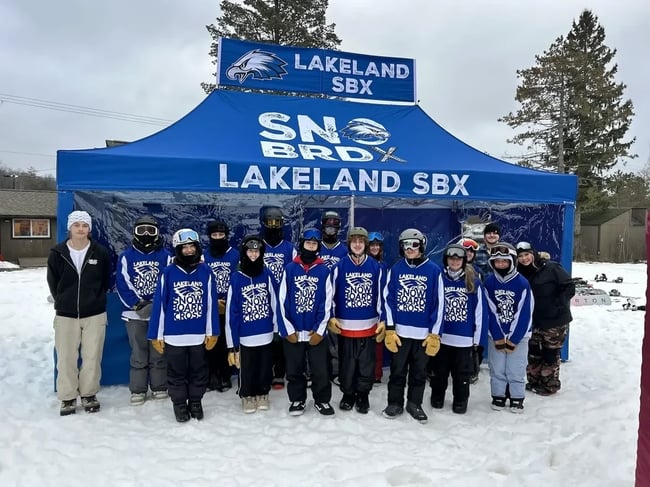
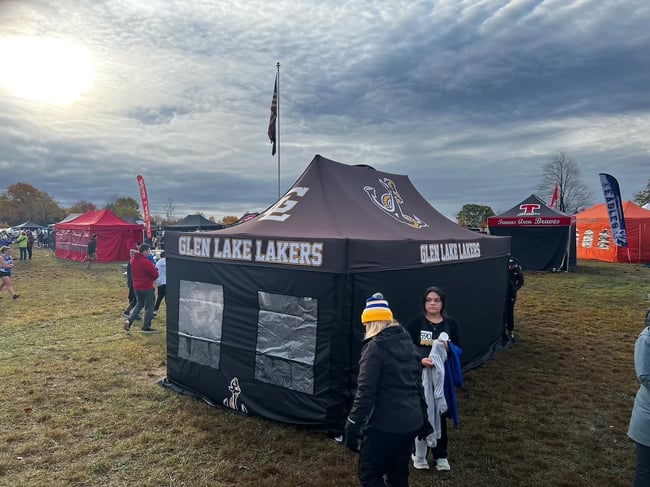
Whether you're representing your football team on Friday nights, setting up at a crowded cross country meet, or bringing your school to a regional robotics competition, custom branding helps your team stand out and makes your shelter easier for athletes, coaches, and families to recognize.
At TentCraft, we can incorporate your school's colors, logos, mascots, and other graphics across the tent itself, along with a variety of accessories that help bring the entire setup together.
Make the Most of Your Tent's Branding Space
Your tent's canopy is typically the most visible place to showcase your school's identity, but there's plenty of room to get creative beyond the roof.
A few options worth considering:
-
Custom-printed canopies: Feature your school name, mascot, athletic logo, and colors across the roof and valances.
-
Branded sidewalls: Add larger graphics, school slogans, or additional logos while providing coverage from the elements.
-
Peak flags: Give standard peak tents additional height and visibility, particularly at crowded events with rows of team shelters.
-
Custom banners and standalone flags: Extend your school's branding beyond the tent footprint and help draw attention to your setup.
-
Scrim and rigid signage: Incorporate additional graphics around tables, barriers, and other event areas to create a more coordinated appearance.
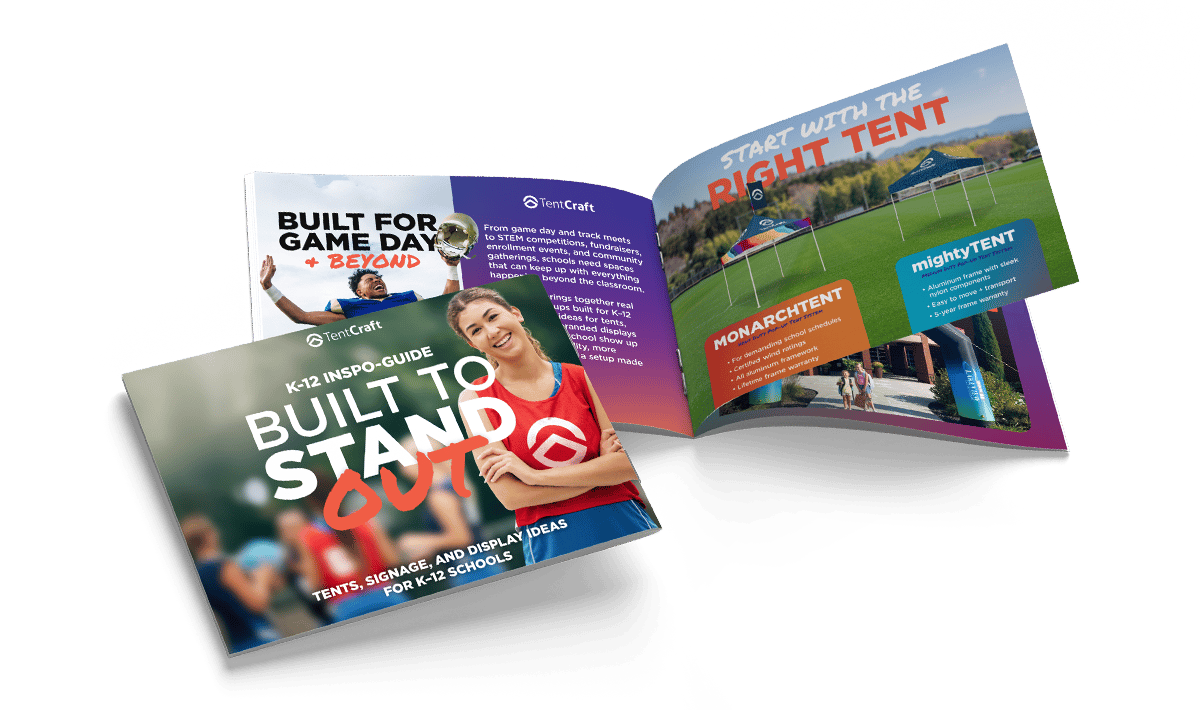
Recommended Resource: K-12 Inspiration Guide
One Tent, Multiple Teams: Branding for the Whole School
If your school plans to share a shelter across different athletic programs, it's worth thinking about how the branding will work for everyone.
For example, a tent featuring your school's mascot, colors, and name can look just as appropriate at a football game as it does at a tennis tournament, track meet, or school fundraiser.
You can also use additional banners or signage to recognize specific teams or activities without making the main tent graphics sport-specific.
This gives athletic departments a consistent, recognizable setup that can travel between programs throughout the school year.
Don't Forget About Your Sponsors
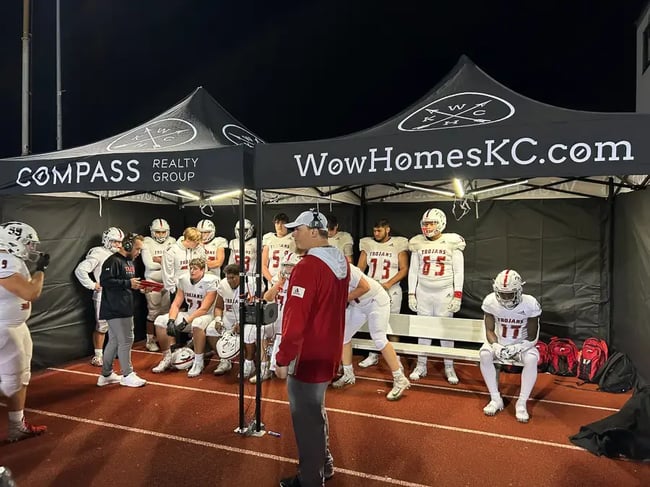
For schools that rely on booster clubs, businesses, or other sponsors to help fund athletic equipment, a custom tent can also provide valuable space for sponsor recognition.
Depending on your design, sponsor logos can be incorporated into the canopy, sidewalls, banners, or other accessories.
It's worth discussing these opportunities before finalizing your tent graphics, particularly if sponsor contributions will help cover the purchase.
Convenient & Creative Ways Teams Pay for Their Shelters
We know school budgets can be tight, especially when athletic departments are balancing equipment purchases across multiple teams and programs. Fortunately, there are a few ways to make purchasing a quality team shelter easier.
-
School purchase orders: TentCraft accepts school purchase orders, making it easier for athletic departments to purchase tents through their established procurement processes.
-
Booster clubs and athletic budgets: Many schools also work with booster clubs or combine resources across athletic programs to help fund equipment purchases. If multiple teams plan to use the same shelter, sharing the expense may make sense.
-
Parent donations: Sometimes, all it takes is an enthusiastic parent who wants to support their school's athletic program. That's what happened at Frankenmuth Schools, where a parent stepped up and offered to pay for the team's tent. It's a great reminder that families can play an important role in helping schools get the equipment they need.
-
Business sponsorships: Some schools turn to business sponsors to help offset the cost of their tents. In return, sponsor logos can be incorporated into the canopy, sidewalls, or additional signage, giving businesses visibility at games, meets, and other school events
If you're exploring these options, our team can help you understand pricing, customization possibilities, and what you'll need to move forward with your purchase.
Let’s Build Your Next Team Shelter Project
Whether you know exactly what your team needs or still have questions about sizes, frame styles, and configurations, our team is here to help.
Tell us a little about your athletic program and how you plan to use your shelter. A dedicated TentCraft representative will help you explore your options, work through the details, and build a setup that makes sense for your team.
Ready to talk through your options? Call us at (800) 950-4553 or request a custom quote. A TentCraft representative will follow up to help you get started.